Introduction to Silicon
author: Leo
2024-08-27
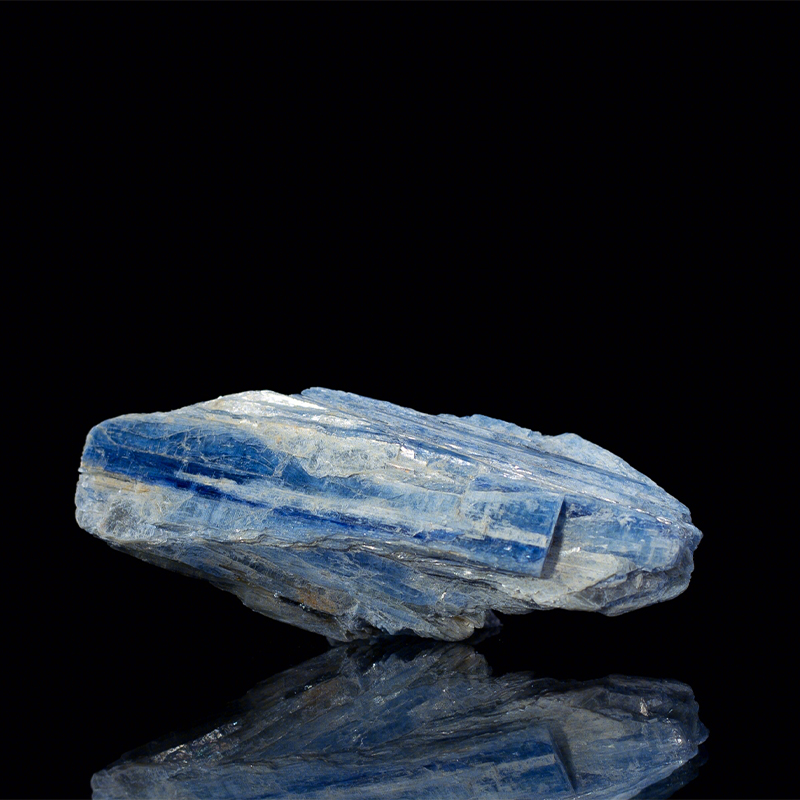
Silicon is one of the most abundant elements in nature, second only to oxygen and accounting for about 25.7 per cent of the earth's crust. There are three stable isotopes of silicon, the natural abundance of which are: 28Si(92.23%),2Si(4.67%),Si(3.10%). There are also seven artificial isotopes. The average atomic weight is 28.0855. Because silicon atoms have a great affinity for oxygen atoms, there is no pure silicon in the free state in nature, but in the form of oxides, such as silica and silicates (mud, stone). In addition, the atmosphere, rainwater, sea water, lower organisms, and even higher animals also contain very small amounts of silicon compounds.
Although humans have used silicon-containing compounds (such as sand, stone, soil, glass, ceramics, etc.) as building materials or raw materials for thousands of years, it was not until 1824 that Berzelius was the first to produce elemental silicon. Subsequently, it is widely used in the metallurgical industry in the production of ferrosilicon alloy, silicon aluminum alloy and silicon calcium alloy; chemical industry in the production of silicone, electronic industry in the production of semiconductor silicon, in optics and optoelectronics also have a small amount of application. Silicon, like carbon, also has two variants, namely amorphous and crystalline. The former is a black hard octahedral structure, the latter is a gray tetrahedral structure. Coarse-grained crystalline silicon generally has a metallic luster. Silicon has a density of 2.3283 g/cm, a hardness of 950 (Knoop), a melting point of 1410 ° C., a boiling point of 2355 ° C., a thermal conductivity (298.2K) of 1.14 W/cm · K), and a specific heat capacity (300K) of 702kJ/(kg · K).
Although humans have used silicon-containing compounds (such as sand, stone, soil, glass, ceramics, etc.) as building materials or raw materials for thousands of years, it was not until 1824 that Berzelius was the first to produce elemental silicon. Subsequently, it is widely used in the metallurgical industry in the production of ferrosilicon alloy, silicon aluminum alloy and silicon calcium alloy; chemical industry in the production of silicone, electronic industry in the production of semiconductor silicon, in optics and optoelectronics also have a small amount of application. Silicon, like carbon, also has two variants, namely amorphous and crystalline. The former is a black hard octahedral structure, the latter is a gray tetrahedral structure. Coarse-grained crystalline silicon generally has a metallic luster. Silicon has a density of 2.3283 g/cm, a hardness of 950 (Knoop), a melting point of 1410 ° C., a boiling point of 2355 ° C., a thermal conductivity (298.2K) of 1.14 W/cm · K), and a specific heat capacity (300K) of 702kJ/(kg · K).
Silicone surfactants promote efficient growth of crops, practice the concept of conservation and environmental protection Polyether modified trisiloxane
Application of Silicone Oil in Lubricating Oil
Related Article